
Problem → Solution
Poor dewatering and wet filter cake in your filter press?
When solid–liquid separation underperforms, the cause is usually in the filter plates and frames — not the press. We engineer the right plates for your slurry and cake.
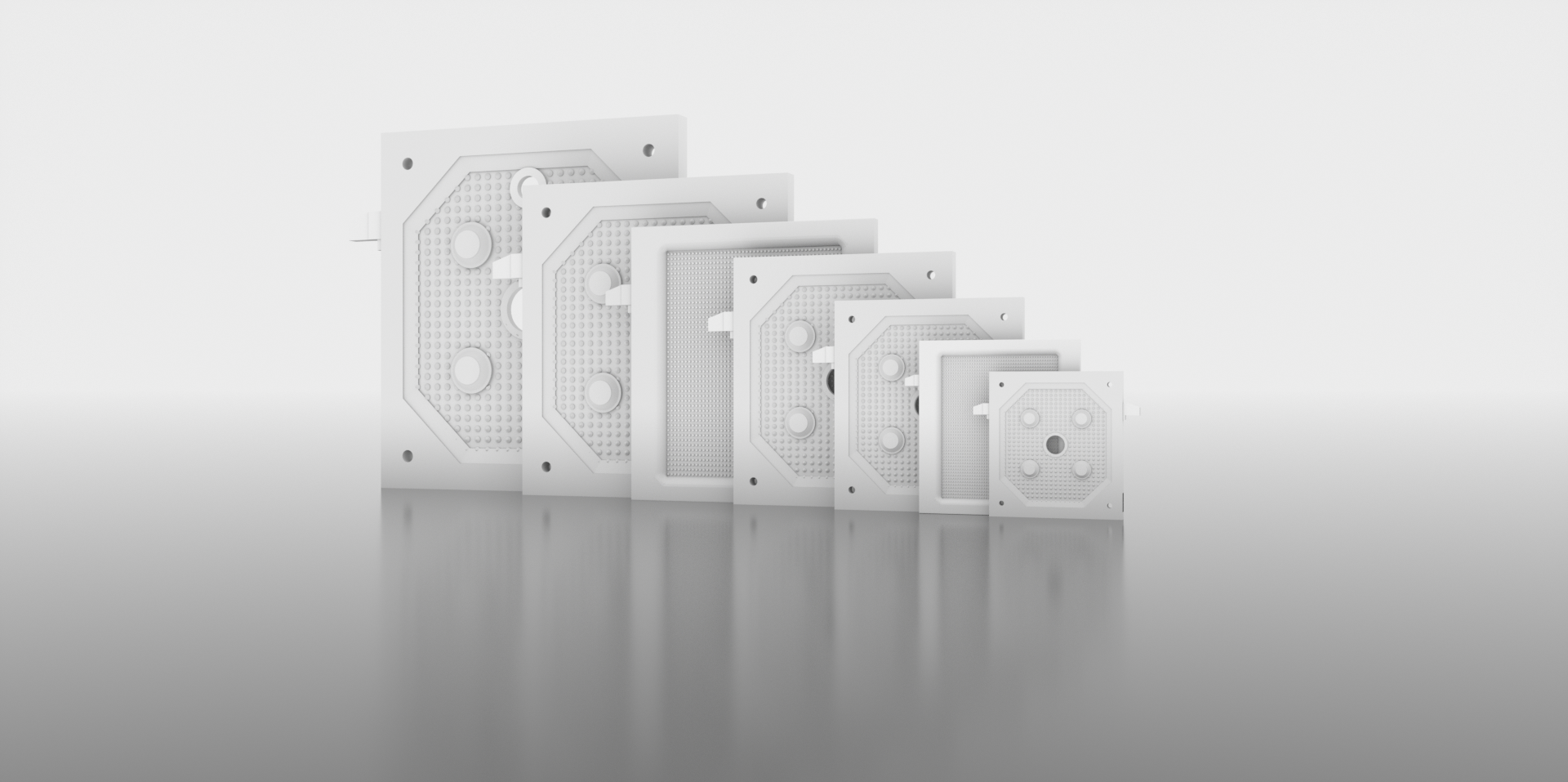
Solid–liquid separation is only as good as the filter plates doing the work. High residual moisture, long cycle times, blinding cloths or cake that will not release all point back to the plate pack — the plate type, chamber geometry, surface and gasket design. R+F FilterElements works back from your slurry, throughput and cake requirements to the filter plates and frames that actually solve the problem.
You probably recognise one of these
Filter cake comes out too wet and heavy — disposal costs keep rising.
Cycle times have crept up and throughput is falling.
Cloths blind quickly or cake does not release cleanly from the plate.
Your press manufacturer is gone, or spare plates are slow and overpriced.
You are dewatering at high temperature or high pressure and standard plates do not last.
From problem to product
We do not start with the product; we start with the cause.
Wet cake, long cycles
Filter cake stays too wet, cycles run long, disposal volumes and costs stay high.
Wrong or worn plate pack
Plate type, chamber depth, drainage surface or gaskets no longer match the slurry — or plates are simply worn.
Correctly engineered plates & frames
Plates and frames specified for your suspension, pressure and cake release behaviour.
Chamber & membrane filter presses
Recessed-chamber plates for standard dewatering, membrane plates for lower residual moisture by squeezing.
The right plate material
Polypropylene as the standard; dedicated designs for high pressure, high temperature or special media.
Filter plates & frames
Standard, CGR (caulked, gasketed, recessed), high-pressure, high-temperature and round plates — plus frames.
How we solve it
Plates matched to your cake
Chamber depth, drainage pattern and surface chosen for your slurry and target residual moisture.
Membrane plates for drier cake
Squeeze membranes reduce residual moisture and shorten cycles where it matters.
Plates & frames from one source
We supply both the filter plates and the frames — specified together for your press.
High pressure & high temperature
Dedicated plate designs for demanding pressure and temperature ranges.
From symptom to the right plate
Most dewatering problems are not a press problem — they are a plate problem. A recessed-chamber plate that is too shallow, a drainage surface that blinds, or a gasket design that leaks will keep the cake wet no matter how good the press is. The first step is always to understand the slurry: particle size distribution, solids load, temperature, chemistry and the residual moisture you actually need.
From there we specify the plate pack: recessed-chamber plates for straightforward dewatering, or membrane plates where a squeeze step gives you drier cake and shorter cycles. Chamber depth, drainage geometry, surface finish and gasket or caulked-gasketed design (CGR) are all chosen for your case — as are the frames that carry them.
Where standard polypropylene is not enough — high pressure, elevated temperature, or aggressive media — we specify dedicated plate designs. The goal is always the same: a drier cake, a stable cycle and a plate pack that lasts, regardless of who originally built your press.
The product: filter plates & frames
Standard, CGR, high-pressure, high-temperature and round filter plates — plus the matching frames — engineered for your chamber or membrane filter press.
Frequently asked questions
Can you supply filter plates for a press from a manufacturer that no longer exists?
Yes. We specify and supply filter plates and frames based on your press dimensions and dewatering requirements — independently of the original press manufacturer.
What is the difference between chamber plates and membrane plates?
Recessed-chamber plates dewater by pressure filtration alone. Membrane plates add a squeeze step: the membrane presses the cake after filling, lowering residual moisture and shortening the cycle. Which one is right depends on your slurry and target cake dryness.
Do you also supply the frames, not just the plates?
Yes — we supply both filter plates and frames, specified together for your press.
Can you handle high-temperature or high-pressure dewatering?
Yes. Beyond standard polypropylene plates we offer dedicated designs for elevated temperature and high-pressure applications.
Tell us about your filtration problem
A short, guided assessment is enough — it goes straight to our engineering team, free and without obligation.