
Problem → Solution
Leaking filter press — why filtrate escapes between the plates
Dripping or spraying filter presses cost filtrate, cleaning effort and safety. We find the cause at the plate, cloth or seal — and engineer the right plate design.
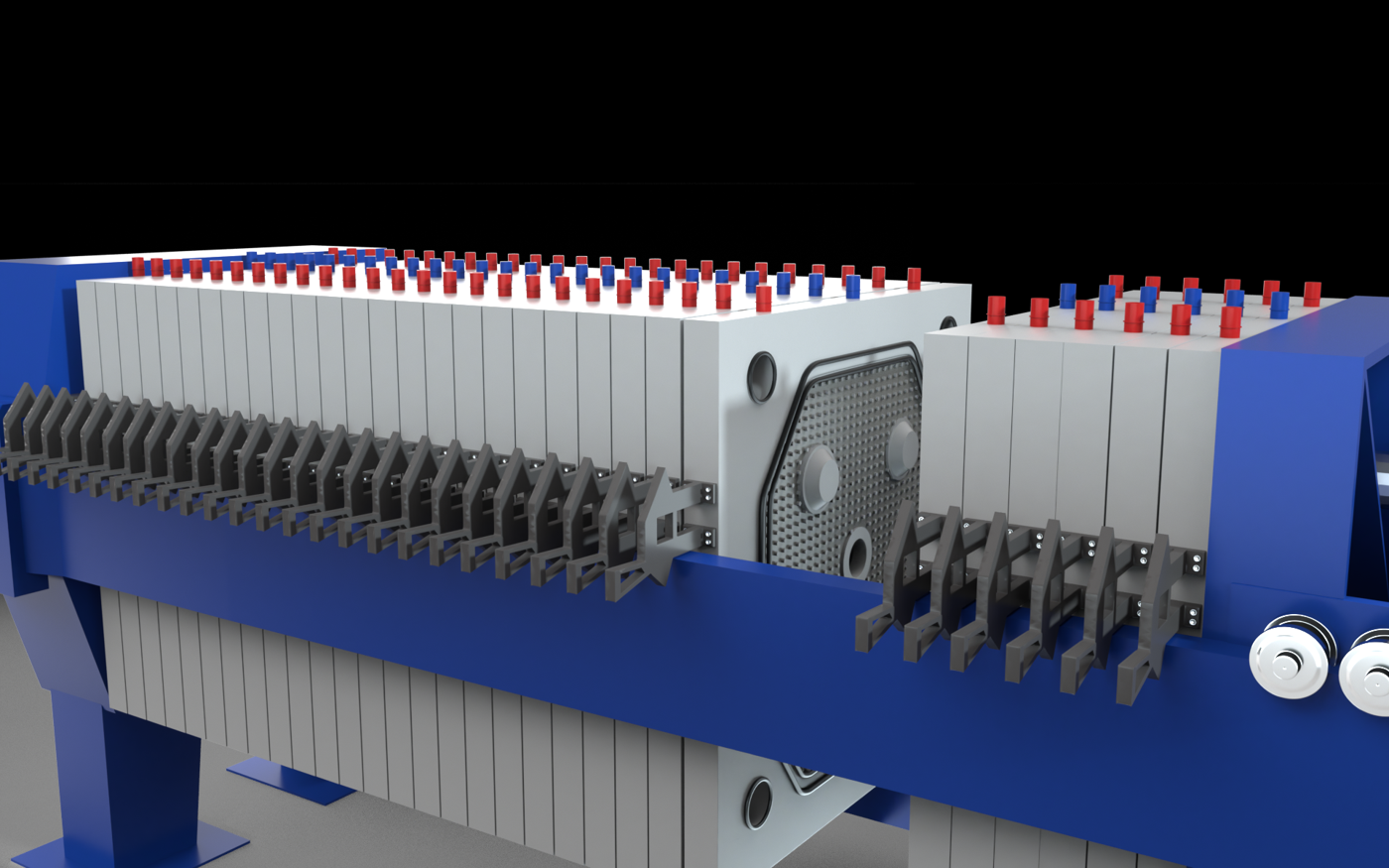
A chamber filter press that leaks between the plates is more than a housekeeping problem. Filtrate or suspension escaping at the sealing faces means product loss, cleaning effort and, with hazardous or solvent-containing media, a safety risk. The cause usually lies in the interaction of plate sealing faces, filter cloth, sealing concept and closing pressure — not in a single component.
Typical signs
Filtrate or suspension drips or sprays out between the plates.
Leakage increases with feed pressure or during squeezing.
Visible cloth folds, cloth damage or deposits in the sealing area.
Sealing faces show wear, scoring or damage.
The medium is hazardous, hygienically sensitive or contains solvents — leakage is not acceptable.
From problem to product
We do not start with the product; we start with the cause.
Press leaks between the plates
Dripping or spraying at the plate edges during filling, filtration or squeezing.
Sealing faces, cloth or seal concept
Worn or damaged sealing faces, cloth folds or edges in the sealing area, or a plate design that seals only via the cloth.
Choose the right sealing concept
Restore the sealing faces and, where tightness is critical, switch to a gasketed plate design.
Cloth-sealed vs. gasketed plates
Standard recessed plates seal via the cloth; CGR plates seal with an O-ring in a dedicated gasket recess.
Plate and seal material
Plate material and seal elastomer (nitrile, EPDM or Viton) matched to medium and temperature.
Filter plates (incl. CGR)
Recessed and CGR filter plates in the dimensions of your filter press.
How we approach it
Find the leak path
Is the leak at the sealing face, at the cloth or at the feed and filtrate ports?
Right sealing concept
Cloth-sealed plates for standard duty — gasketed CGR plates where tightness is critical.
Matched elastomer
O-ring material selected for your medium and process temperature.
Why filter presses leak — and what helps
In a standard recessed-plate press, the filter cloth itself forms the seal between the plate faces. Any fold, crease, worn spot or deposit in the sealing area creates a leak path. Damaged or worn sealing faces on the plates have the same effect, as does insufficient or uneven closing pressure.
Where tightness is critical — food, pharmaceutical, solvent-containing or explosion-protected applications — a gasketed plate design is the more robust solution. CGR (caulked gasket recessed) plates have a gasket recess in which the cloth is caulked and sealed with an O-ring, so the seal no longer depends on the cloth alone.
We look at your current plates, cloth and operating conditions and recommend whether a cloth change, new plates or a switch to CGR plates solves the problem — in the dimensions of your existing press.
The product: filter plates incl. CGR
Recessed chamber plates and CGR caulked gasketed recessed plates with O-ring sealing in nitrile, EPDM or Viton — in the format of your filter press.
Frequently asked questions
Why does my filter press leak although the plates are new?
With standard recessed plates the cloth forms the seal. Folds, worn cloth or deposits in the sealing area can cause leaks even with new plates.
What is the difference between recessed and CGR plates?
Recessed plates seal via the filter cloth. CGR plates additionally have a gasket recess with an O-ring, which seals independently of the cloth.
Can CGR plates be supplied for my existing press?
Filter plates are made in the dimensions of your filter press. Send us the plate size and press data and we will check the design.
Tell us about your filtration problem
A short, guided assessment is enough — it goes straight to our engineering team, free and without obligation.