
Problem → Solution
Filter medium attacked by chemicals — swelling, embrittlement, disintegration
When filter media swell, become brittle or disintegrate, the material does not match the chemistry of the process. We select medium, element materials and seals for your chemical environment.
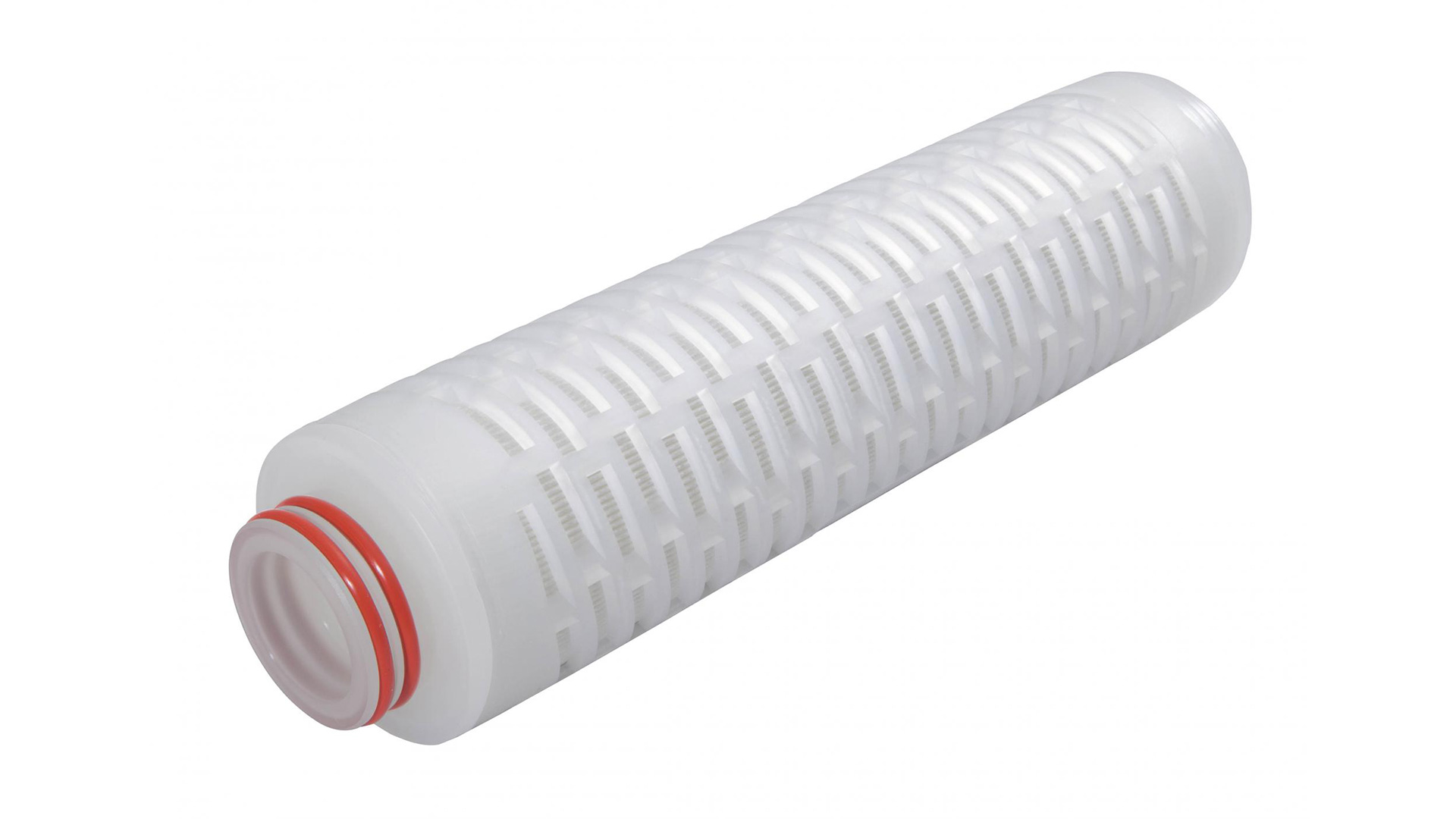
Acids, alkalis, solvents and oxidising agents attack polymers in different ways. A filter medium that is perfectly suitable for water can swell in a solvent, become brittle in an oxidising medium or lose strength in a hot alkali. The consequences are fibre shedding into the filtrate, collapsing elements and short service lives. In most cases the filter is not “bad” — the material simply does not match the chemistry.
Typical signs
The filter medium discolours, swells or feels brittle after use.
Fibres or particles from the filter appear in the filtrate.
Elements deform, collapse or come apart at the end caps.
Seals swell, harden or crack.
Service life dropped after a change in process chemistry, cleaning agent or temperature.
From problem to product
We do not start with the product; we start with the cause.
Medium swells, embrittles or disintegrates
Discolouration, loss of strength, fibre release, deformed or collapsed elements.
Material does not match the chemistry
Polymer, end cap, adhesive or seal not resistant to the medium at the given temperature and concentration.
Select materials for the chemical environment
Define medium, concentration and temperature — and choose every element component accordingly.
Consistent material concept
Filter medium, support, end caps, bonding and seals as one resistant system.
Polymer and elastomer selection
For example PP, polyester, PTFE, PPS or PVDF media and nitrile, EPDM or Viton seals — depending on the chemistry.
Filter cartridges & elements
Filter cartridges and elements with a material concept matched to your medium.
How we approach it
Know the chemistry
Medium, concentration, temperature and cleaning agents — all of them affect resistance.
Every component counts
The weakest material in the element determines its life — often the seal or the bonding.
Test where uncertain
Where resistance data is not conclusive, samples can be tested in the real medium.
Why chemicals destroy filter media — and what helps
Chemical resistance is never a property of a material alone — it depends on medium, concentration, temperature and exposure time. Polypropylene, for example, is resistant to many acids and alkalis but can swell in certain solvents and is sensitive to strong oxidising agents. Polyester is unsuitable for hot alkalis. PTFE is resistant to almost all chemicals but is more expensive and mechanically different.
A filter element consists of several materials: the filter medium, support layers, core, end caps, adhesive or welding and seals. Each of them must withstand the medium. In practice, the seal or the bonding is frequently the first component to fail, even when the filter medium itself is suitable.
Cleaning agents and temperature changes are often overlooked: a medium that is resistant during production can be attacked during hot caustic cleaning. We consider the complete operating cycle when selecting the material concept.
The product: filter cartridges & elements
Filter cartridges and filter elements with medium, end caps and seals selected for your chemical environment.
Frequently asked questions
Which filter material is the most chemically resistant?
PTFE is resistant to almost all chemicals. However, the best choice depends on the specific medium, temperature and mechanical requirements — often PP, PVDF or PPS are the more suitable option.
Why does my filter fail although the medium is listed as resistant?
Resistance tables usually refer to one material at one temperature. End caps, adhesive and seals, as well as higher temperatures or cleaning agents, can still cause failure.
What information do you need?
The medium and its concentration, operating and cleaning temperatures, cleaning agents and the current filter materials, if known.
Tell us about your filtration problem
A short, guided assessment is enough — it goes straight to our engineering team, free and without obligation.