
Problem → Solution
Filter clogging and blinding — why your filter blocks too fast
When a filter clogs quickly, the cause is usually a mismatch between particles, medium and filtration principle. We find the mismatch and engineer the right filter element.
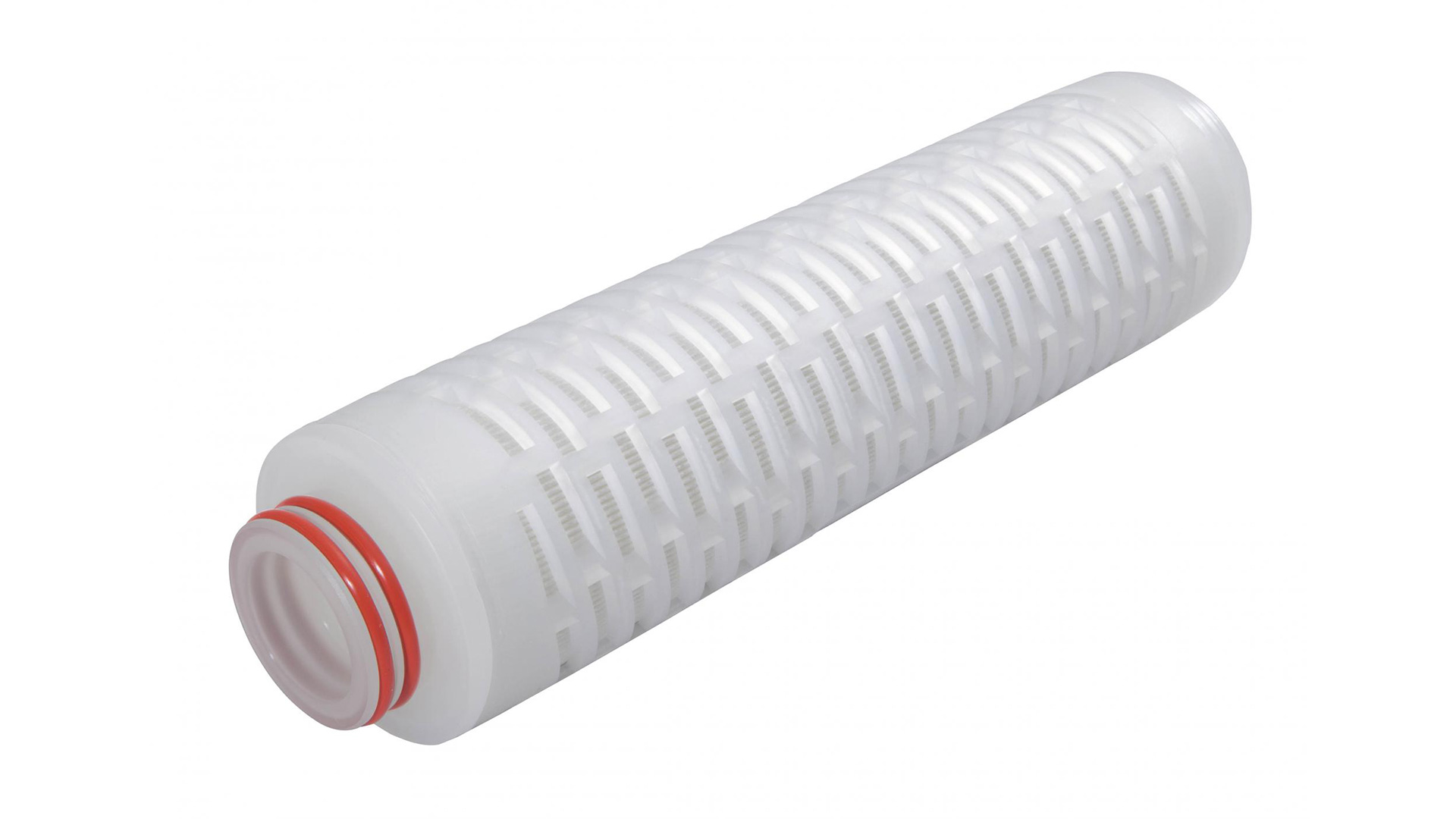
A filter that clogs too fast costs money twice: through frequent replacement or cleaning and through downtime. Blinding — particles lodging permanently in the medium — makes cleaning ineffective. In most cases the cause is not the filter itself, but a medium, filtration grade or filtration principle that does not match the particles and solids load in the process.
Typical signs
Filters have to be replaced or cleaned much more often than planned.
Differential pressure rises quickly after a replacement.
Cleaning or backwashing no longer restores the original flow.
Flow drops although pump and process are unchanged.
A finer filter was installed — and the problem became worse.
From problem to product
We do not start with the product; we start with the cause.
Filter blocks too quickly
Short intervals between replacements or cleanings, rising pressure, falling flow.
Medium does not match the particles
Filtration grade too fine, solids load too high for the principle, or particles penetrating and lodging in the medium.
Match medium and principle to the load
Choose the right filtration grade and decide between surface and depth filtration — or stage the filtration.
Surface, depth or staged filtration
Surface filtration for cake-forming loads, depth filtration for low loads, prefiltration to protect fine filters.
Medium and surface
Material, structure and surface finish selected for particle retention and cleanability.
Filter cartridges & elements
Filter cartridges and filter elements with the medium and filtration grade matched to your process.
How we approach it
Understand the particles
Particle size, shape and solids load determine which filtration principle works.
Right filtration grade
As fine as necessary, not as fine as possible — to balance quality and service life.
Staged filtration
A prefilter can protect the fine filter and extend its service life significantly.
Why filters clog — and what helps
Clogging happens when the medium retains more particles than its structure can hold. With depth filters this means the dirt-holding capacity is exhausted; with surface filters a dense layer forms that no longer lets enough fluid through. Blinding is the special case where particles become trapped in the medium itself and can no longer be removed by cleaning.
The most common cause is a filtration grade that is finer than the process requires, or a filtration principle that does not suit the solids load. High solids loads favour surface filtration with cake formation; low loads favour depth filtration. Where both are present, staged filtration with a prefilter is often the most economical solution.
The medium surface also plays a role: smooth or treated surfaces can improve cake release and cleanability. We look at the whole chain — particles, principle, medium and element — before recommending a product.
The product: filter cartridges & elements
Filter cartridges and filter elements with medium, filtration grade and construction matched to your particles and solids load.
Frequently asked questions
Why does a finer filter clog faster?
A finer medium retains more particles, including those that do not need to be removed. Its capacity is exhausted sooner, so differential pressure rises faster.
What is blinding?
Blinding means particles become lodged permanently inside the medium. Cleaning or backwashing then no longer restores the original permeability.
Does a prefilter help?
Often, yes. A prefilter removes coarse particles and protects the fine filter, which can extend its service life considerably.
Tell us about your filtration problem
A short, guided assessment is enough — it goes straight to our engineering team, free and without obligation.